How Growth Systems For B2B minimizes human error in business processes
Wiki Article
Transform Your Company: Just How AI Automation Is Changing B2B Workflow
AI automation is improving B2B operations in considerable methods. Business are embracing this technology to simplify workflows and enhance effectiveness. As jobs become automated, organizations can concentrate on tactical development rather than mundane procedures. The effects of these changes are extensive, affecting whatever from customer communications to provide chain administration. Recognizing this change is vital, as the future of service hinges on the efficient assimilation of AI right into day-to-day operations. What lies in advance in this evolving landscape?Recognizing AI Automation in B2B Context
As services progressively look for efficiency, comprehending AI automation within the B2B context ends up being crucial. AI automation describes the application of expert system modern technologies to simplify and enhance company processes. In B2B atmospheres, this can manifest in various kinds, such as automating data access, maximizing supply chain logistics, or enhancing inventory management. Organizations leveraging AI automation can minimize functional expenses, minimize human mistake, and boost performance. In addition, AI devices can assess substantial amounts of data to provide workable insights, allowing notified decision-making. The assimilation of AI right into B2B procedures not only changes typical workflows yet additionally fosters agility and scalability, permitting services to adjust to market changes swiftly and properly. Welcoming this innovation is crucial for staying competitive in today's electronic landscape.Enhancing Consumer Experience Through AI
Just how can AI change consumer interactions in the B2B industry? AI boosts customer experience by offering personalized, prompt, and reliable service. Smart chatbots and digital aides can take care of queries 24/7, guaranteeing customers receive prompt responses. Predictive analytics enable companies to expect customer requirements, customizing offerings as necessary. AI-driven platforms can assess client data, permitting targeted advertising strategies and boosted involvement. Furthermore, sentiment analysis tools assess customer feedback, helping companies fine-tune their services. By automating routine jobs, AI maximizes personnels to concentrate on high-value communications, promoting more powerful relationships. The assimilation of AI not just improves communication but likewise constructs depend on and loyalty, eventually elevating the overall customer experience in the competitive B2B landscape.Enhancing Supply Chain Administration With AI
AI plays an important role in maximizing supply chain administration via predictive analytics and automated supply control (Minarik AI). By leveraging anticipating analytics, organizations can prepare for demand fluctuations and readjust their procedures accordingly. Automated inventory systems further improve effectiveness by making certain supply degrees are preserved, decreasing waste and enhancing overall productivity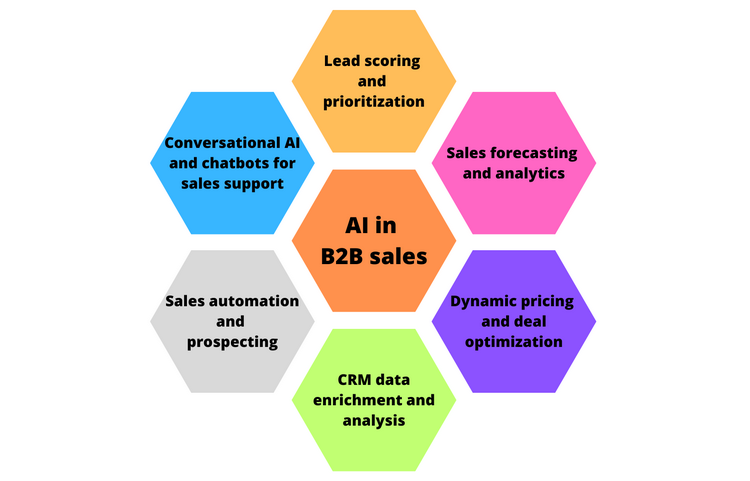
Predictive Analytics Advantages
While lots of services encounter challenges in taking care of complicated supply chains, predictive analytics uses a transformative remedy by leveraging vast amounts of data to anticipate fads and enhance operations. By evaluating historic data along with real-time inputs, predictive analytics allows companies to identify patterns and prepare for future needs. This insight enables even more informed decision-making, improving performance and reducing expenses. In enhancement, organizations can proactively address possible disturbances by predicting supply chain traffic jams and adjusting approaches accordingly. The integration of predictive analytics not just enhances stock administration however also fosters more powerful relationships with providers and customers via timely feedbacks to market changes. Eventually, the fostering of predictive analytics encourages organizations to stay affordable in an increasingly dynamic service atmosphere.Automated Supply Control
As companies significantly depend on anticipating analytics to enhance supply chain procedures, automated supply control becomes an effective ally in this effort. By leveraging AI-driven innovations, firms can boost precision in stock monitoring, reduce stockouts, and lessen excess supply. Automated systems assess real-time data, allowing companies to anticipate demand fluctuations and adjust supply levels accordingly. This not just simplifies order gratification however likewise improves capital management by lowering holding expenses. In addition, AI can recognize patterns in acquiring behavior, enabling more informed decision-making pertaining to provider connections and purchase methods. Ultimately, automated inventory control not only boosts operational efficiency however additionally enhances customer fulfillment by ensuring product availability, solidifying its function as a crucial component in contemporary supply chain administration.Data-Driven Choice Making Powered by AI
In today's affordable landscape, companies significantly count on data-driven decision-making to enhance operational efficiency and strategic preparation. Fabricated intelligence plays a critical role in this change by examining large quantities of information promptly and precisely. AI algorithms recognize patterns, patterns, and anomalies that human analysts might overlook, allowing organizations to make informed choices based upon real-time insights - Minarik AI. This ability permits firms to forecast market shifts, enhance resource allowance, and customize their offerings to customer requirements. Additionally, AI-driven analytics promote risk evaluation and management, making sure that companies can browse uncertainties effectively. By leveraging these advanced tools, businesses not just improve their decision-making procedures but likewise get a competitive advantage in their particular markets, promoting growth and advancementAutomating Repetitive Tasks to Increase Productivity
Improving recurring tasks with automation substantially improves productivity within B2B procedures. By implementing AI-driven services, firms can get rid of mundane activities such as information entry, invoice handling, and record generation. This shift permits employees to concentrate on higher-value tasks, cultivating creative thinking and calculated thinking. Automating these time-consuming processes not only reduces human mistake yet additionally increases workflow effectiveness. In addition, organizations can attain consistent results and boosted precision, which is critical in preserving customer complete satisfaction. The assimilation of automation tools allows organizations to assign sources extra efficiently, guaranteeing that teams can respond quickly to market demands. Eventually, embracing AI for recurring jobs is a tactical move that changes functional capacities and drives overall company development.Incorporating AI With Existing Company Procedures
When incorporating AI with existing service processes, several organizations deal with challenges. These challenges often stem from a lack of comprehending relating to exactly how AI can complement existing operations. Effective assimilation requires an extensive analysis of existing procedures to determine areas where AI can include value. Organizations needs to also guarantee that their groups are outfitted with the required skills to take advantage of AI tools effectively - Growth Systems For B2B. In enhancement, smooth integration rests on the compatibility of AI modern technologies with legacy systems. Companies often discover it valuable to adopt a phased method, piloting AI applications in particular departments prior to a more comprehensive rollout. This method enables for adjustments based upon preliminary comments, assuring smoother changes and maximizing the prospective benefits of AI automation in enhancing productivity and effectivenessFuture Fads in AI Automation for B2B Business
As B2B firms seek to the future, improved information analytics is readied to play a critical role in driving decision-making procedures. Smart procedure automation will certainly also emerge as a vital pattern, boosting and enhancing procedures performance. These advancements guarantee to improve exactly how businesses operate, eventually leading to more responsive and agile companies.Boosted Data Analytics
While organizations progressively depend on data-driven decisions, the duty of AI in boosting information analytics is ending up being extra crucial in B2B procedures. AI technologies facilitate the collection and evaluation of large datasets, redirected here allowing business to reveal important insights that drive strategic preparation. Predictive analytics powered by AI allows organizations to forecast market fads and client actions with higher precision. Furthermore, artificial intelligence formulas improve data interpretation, recognizing patterns that human analysts might neglect. This results in more educated decision-making and enhanced source allowance. As B2B companies remain to welcome AI-driven analytics, they can expect improved functional performance, improved consumer experiences, and an one-upmanship in the market. The future of information analytics in B2B pivots on integrating innovative AI capacities.Intelligent Refine Automation
Intelligent Process Automation (IPA) is poised to revolutionize B2B operations by effortlessly incorporating AI modern technologies with conventional company processes. This innovative strategy combines robot procedure automation (RPA) with advanced AI capabilities, making it possible for companies to enhance efficiency and accuracy. Business can automate repetitive jobs, such as information entry and invoice processing, enabling staff members to concentrate on critical efforts. IPA likewise leverages artificial intelligence and all-natural language handling, enhancing decision-making with real-time data evaluation. As organizations significantly embrace IPA, they can expect significant cost reductions and boosted customer experiences. Future fads suggest a growing reliance on IPA for scalability and flexibility, placing companies to prosper in an ever-evolving industry. Welcoming IPA will be essential for maintaining competition in the digital age.Regularly Asked Questions
What Industries Advantage Many From AI Automation in B2B Procedures?
Just How Can Local Business Implement AI Automation Properly?
Local business can apply AI automation effectively by identifying recurring tasks, picking ideal devices, incorporating options slowly, educating team, and constantly evaluating performance to enhance processes, making sure a smooth changeover and optimizing performance.What Are the Expenses Connected With AI Automation Execution?
The expenses connected with AI automation execution typically consist of software program acquisition, facilities upgrades, educating personnel, ongoing maintenance, and potential appointment costs. These expenditures can differ substantially based on the scale and complexity of the automation services selected.Exactly how Do I Determine ROI From AI Automation Initiatives?
To measure ROI from AI automation efforts, one must assess expense financial savings, efficiency renovations, and income development against implementation costs. Tracking essential performance signs gradually supplies beneficial understandings right into efficiency and total roi.What Skills Are Required to Take Care Of AI Automation Projects?
Effective monitoring of AI automation projects needs skills in project management, information analysis, programming, and understanding AI innovations. Additionally, strong communication, analytic capacities, and flexibility are essential for steering the intricacies of such efforts.As companies significantly look for effectiveness, recognizing AI automation within the B2B context comes to be essential. The combination of AI into B2B procedures not just transforms standard process but also promotes agility and scalability, permitting organizations to adjust to market changes quickly and properly. While businesses significantly depend on data-driven decisions, the duty of AI in enhancing data analytics is coming to be a lot more important in B2B procedures - AI Automation For B2B. Intelligent Process Automation (IPA) is positioned to change B2B procedures by flawlessly integrating AI technologies with typical organization procedures. Efficient management of AI automation projects needs abilities in task administration, data evaluation, programs, and understanding AI innovations
Report this wiki page